






Films/
2026
The Fracture

70 seconds is deceptive. It sounds brief. But inside those 70 seconds:
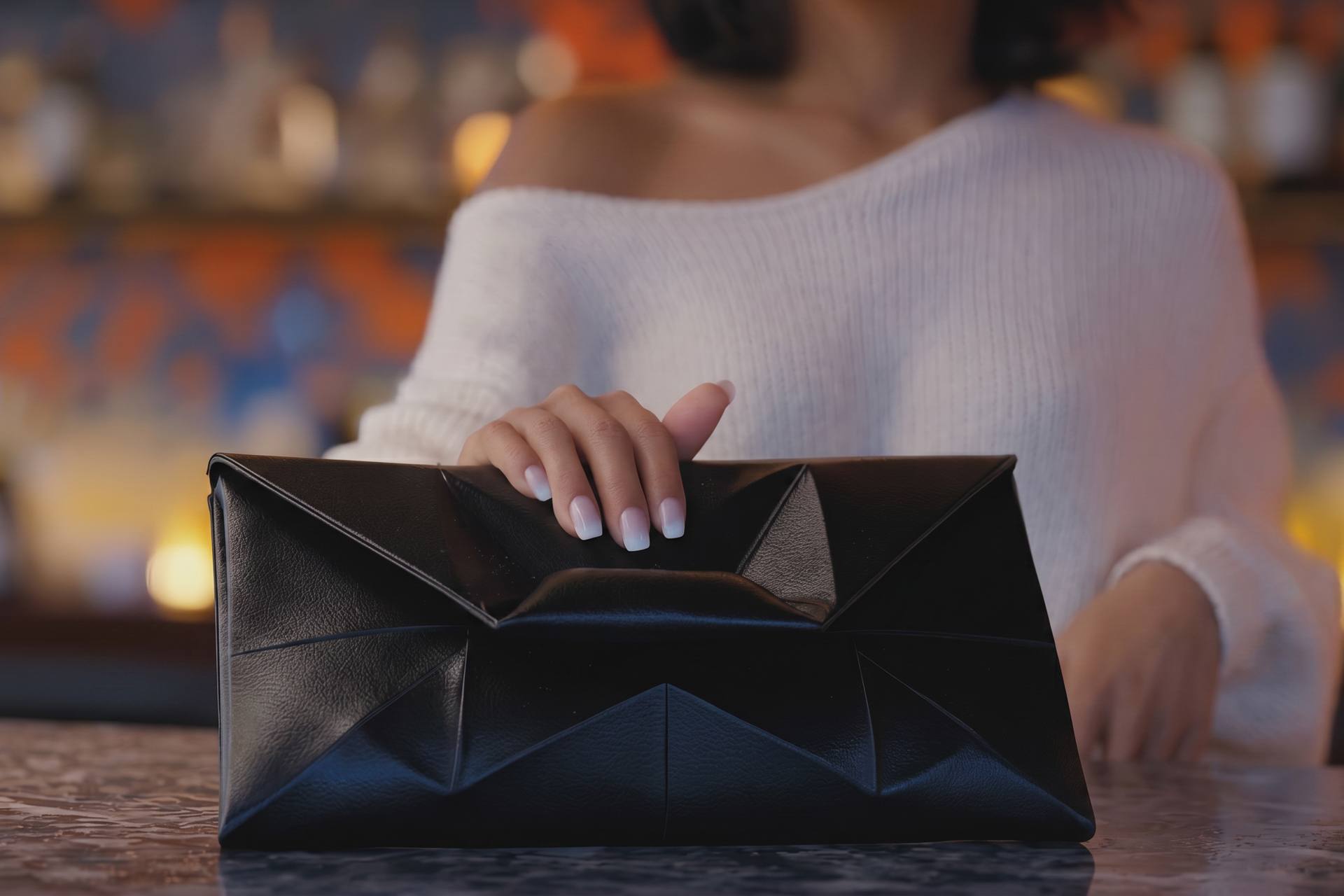
A woman arrives, parks, walks through a copper door, crosses a mosaic bar, places her clutch on the counter, stands with her weight on one hip, notices a man behind her, watches him in reflection, does not turn, smiles at the bartender, leaves through the same copper door, pauses in the taillight glow, looks back at the fractured glass, lowers herself into the backseat, opens her clutch, finds a note she did not put there, reads it in silence, exhales slowly, closes the clutch, and looks up at the rearview mirror — where the driver is smiling.
That is not 70 seconds of speed. That is 70 seconds of compression.
Every beat has air. The streetlights have time to slide across her face. The wine glass has time to catch his reflection. Her fingers have time to hover over the note. The audience has time to wonder — how did it get there?
70 seconds is the exact time it takes for a woman to arrive, be approached, refuse to turn around, leave, and discover that someone has entered her world without permission — without ever telling us how she feels about it.
Her face tells us. We just have to watch.
0
Seconds
On The Title.
The film is called THE FRACTURE. The title refers to four things simultaneously:
The architecture. The building is smooth concrete on the outside — contemporary, sculptural, unreadable. Inside, a colorful mosaic accent wall dominates the room. The facade itself has fractured glass. You cannot see clearly into her world. You can only guess.
The encounter. A woman is approached from behind by a man she never turns to see. The audience watches her watch him in reflection. The fracture is between being watched and being wanted. She knows the difference. She chooses neither.
The method. This film was edited together. In one version, she holds white wine and sees him coming from the front. In another, she holds red wine and feels him behind her. The fracture is also in the process — the director used it.
The note. A folded piece of heavy paper appears in her clutch. She did not put it there. The audience never reads it. The fracture is now inside her bag — inside her world — and she does not know how it got there.




Info
Stacey Wiggins
Creative Director + WorldBuilder