




Films/
2026
TeddyBear
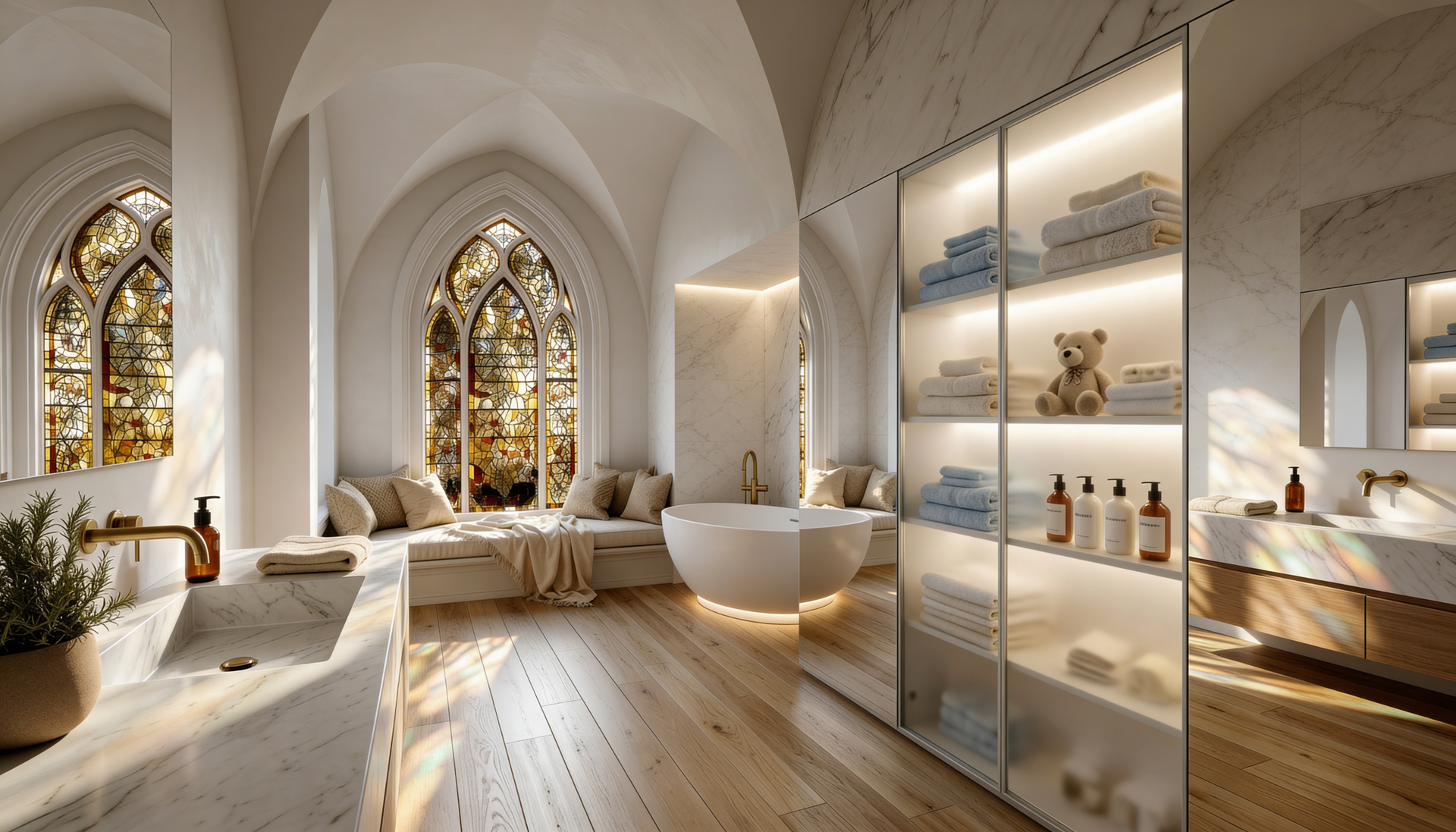
A bathroom that was once a church. Stained glass windows casting colored light across cream tiles. An empty space waiting for its story to begin.
Madhu walks in, carrying her six-month-old son, Ari. She opens the sliding frosted cabinet doors and pulls out a teddy bear—simple, expensive, cherished. A brand built on nostalgia.
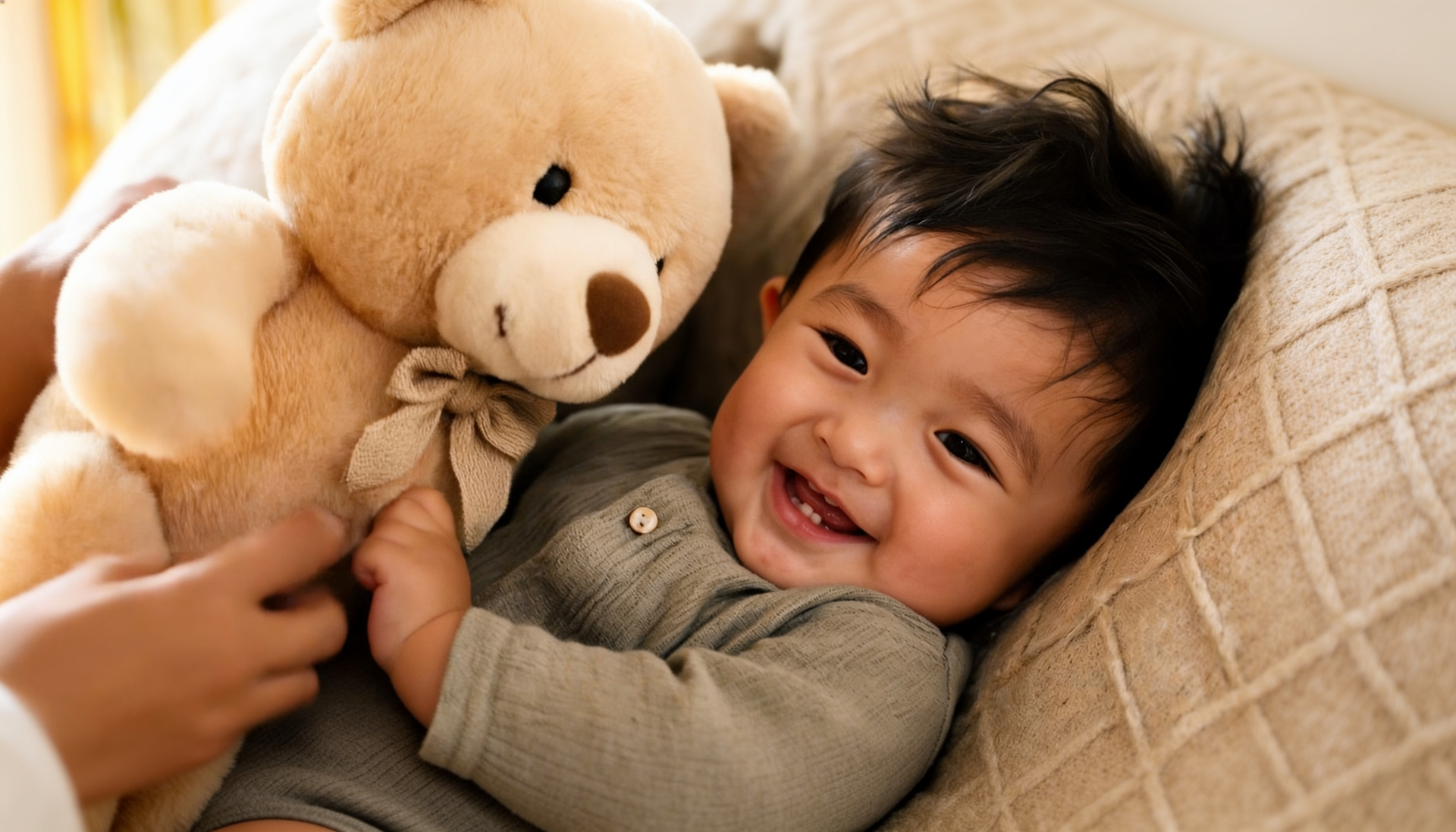
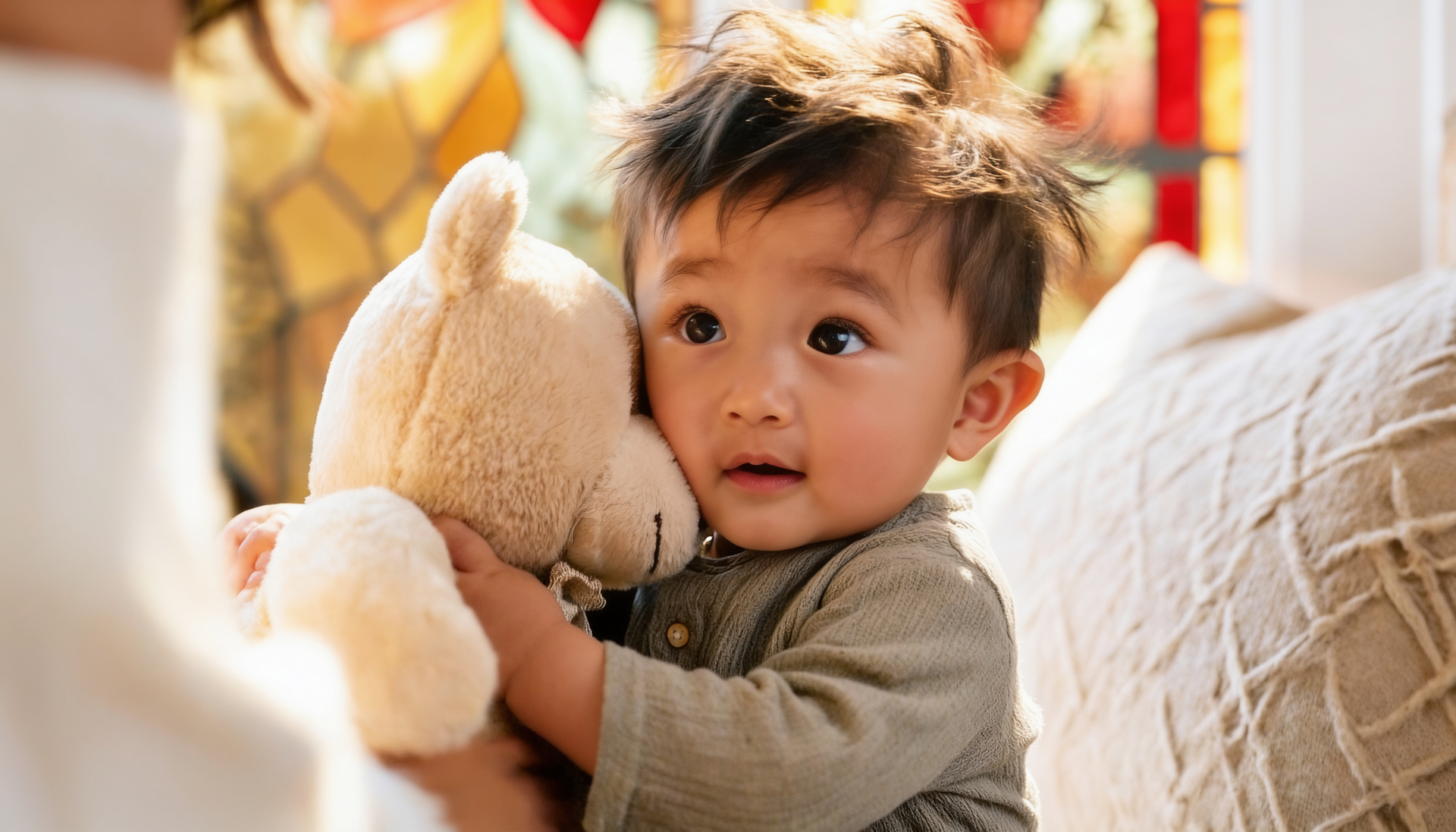
She carries Ari and the bear to the window seat near the stained glass. She lays Ari down. He grips the bear and falls back onto a pillow in pure glee. Madhu tickles him. He giggles. He's learning the world.
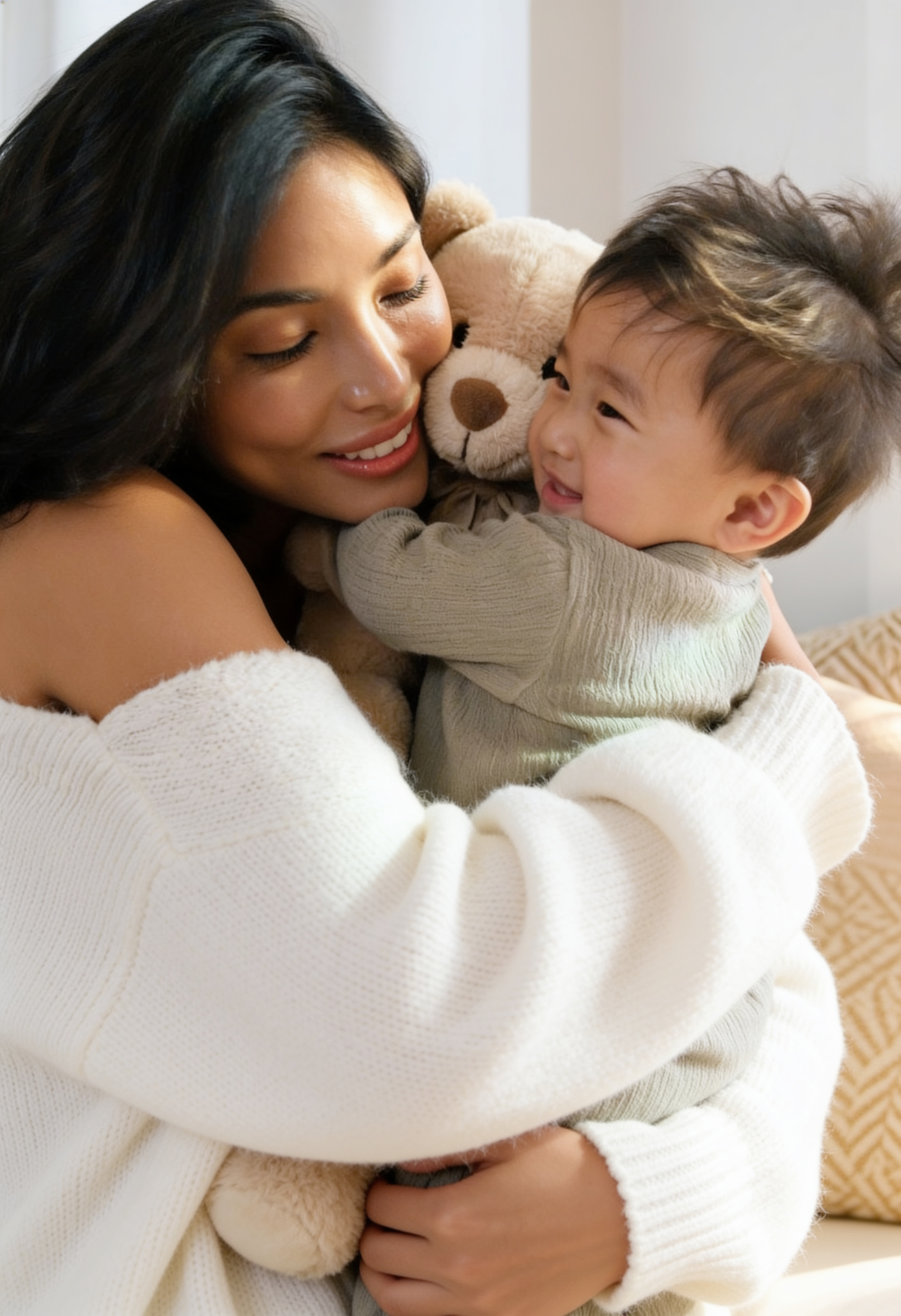
Then he sits up. Rolls forward. The weight of the bear pulls him down. Madhu picks him up and holds him close. He looks up, pointing at the vaulted ceiling in awe. He's getting it.
Madhu hugs him and the bear together. The bear is family too. She holds Ari's hand up so he can continue to point at the ceiling—encouraging wonder, letting him explore.
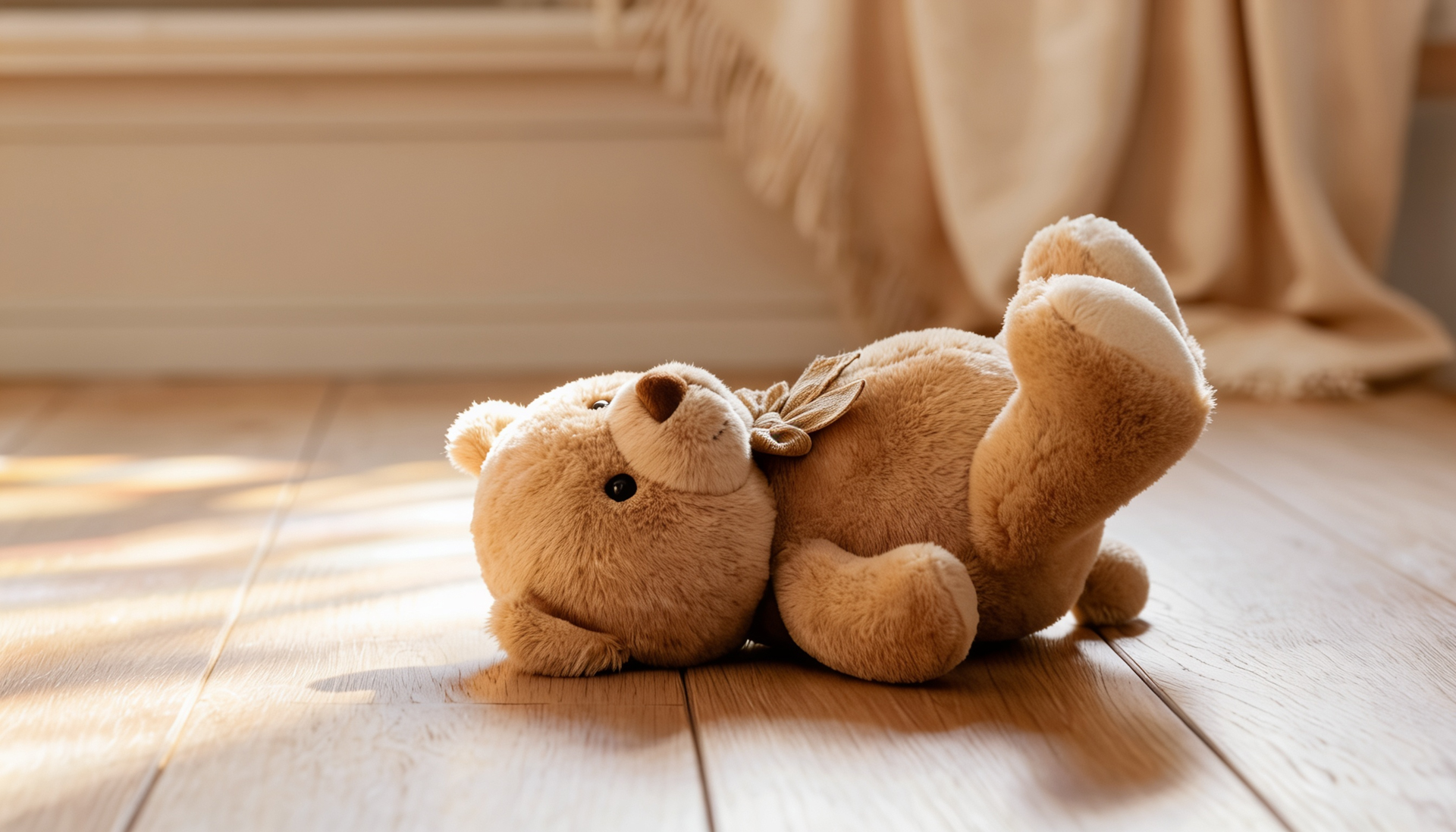
The room empties. The camera closes in on the teddy bear. It seems to nod. Then it falls off the edge of the counter onto the floor.
Madhu appears barefoot. She picks up the bear and looks at it. She knows.
It's alive.
The scene ends with a still camera on the teddy bear lying —on its belly— on the counter on a linen cream towel. Quiet. Still. Watching.
0
Seconds
Structure. A bathroom that was once a church. Stained glass windows. Vaulted ceilings. The space holds memory before anyone enters.Intrusion. Madhu walks in with Ari. She opens the cabinet. She pulls out the bear. She is the question the space must answer.Integration. Ari lies on the window seat. The light from the stained glass falls on him. He holds the bear. He belongs here now.Intimacy. Madhu tickles him. He giggles. She holds his hand up so he can point at the ceiling. She knows the bear is alive. The space, the mother, the child, and the bear are in conversation.Release. The room empties. The bear falls. Madhu picks it up. She knows. And then she leaves us with the bear—quiet, still, watching.

Info
Stacey Wiggins
Creative Director + WorldBuilder