It is architecture as a verb in three movements
Stacey Wiggins
We have monuments that look backward. We need architecture that moves forward. “Legacy Ascendant” is not a pitch for a building. It is a manifesto for a kinetic system, a cultural engine visualized through a stunning short film. Its thesis is simple: legacy is not a preserved artifact; it is a living, breathing, ascending force. The film proves this through a brilliant, tripartite structure of human gesture and architectural audacity.
Movement I: The Foundation & The Ascent
A solitary ballerina holds a perfect pointe. Her arched foot is the first line drawn, the foundational gesture of discipline and elevation. From this human springboard, the film launches us into the sky.
We see Museum Option 1: The Ocean Glow Museum. It is not built on the land, but carved into the mountainside—an “unraveling slashed cone” of wood, glass, and gradient stone. It begins at eye level, intimate, before an airplane’s perspective reveals its majestic nesting in the hills. This is legacy rooted in the earth, yet reaching for the horizon. It is organic, formidable, and harmoniously lit.
Cut back: another ballerina faces us, her head bowed in a gesture of reverence and prayer. The architecture has just shown us the scale of the dream; the artist reminds us of its sacred source.
Movement II: The Urban Heart & The Bridge
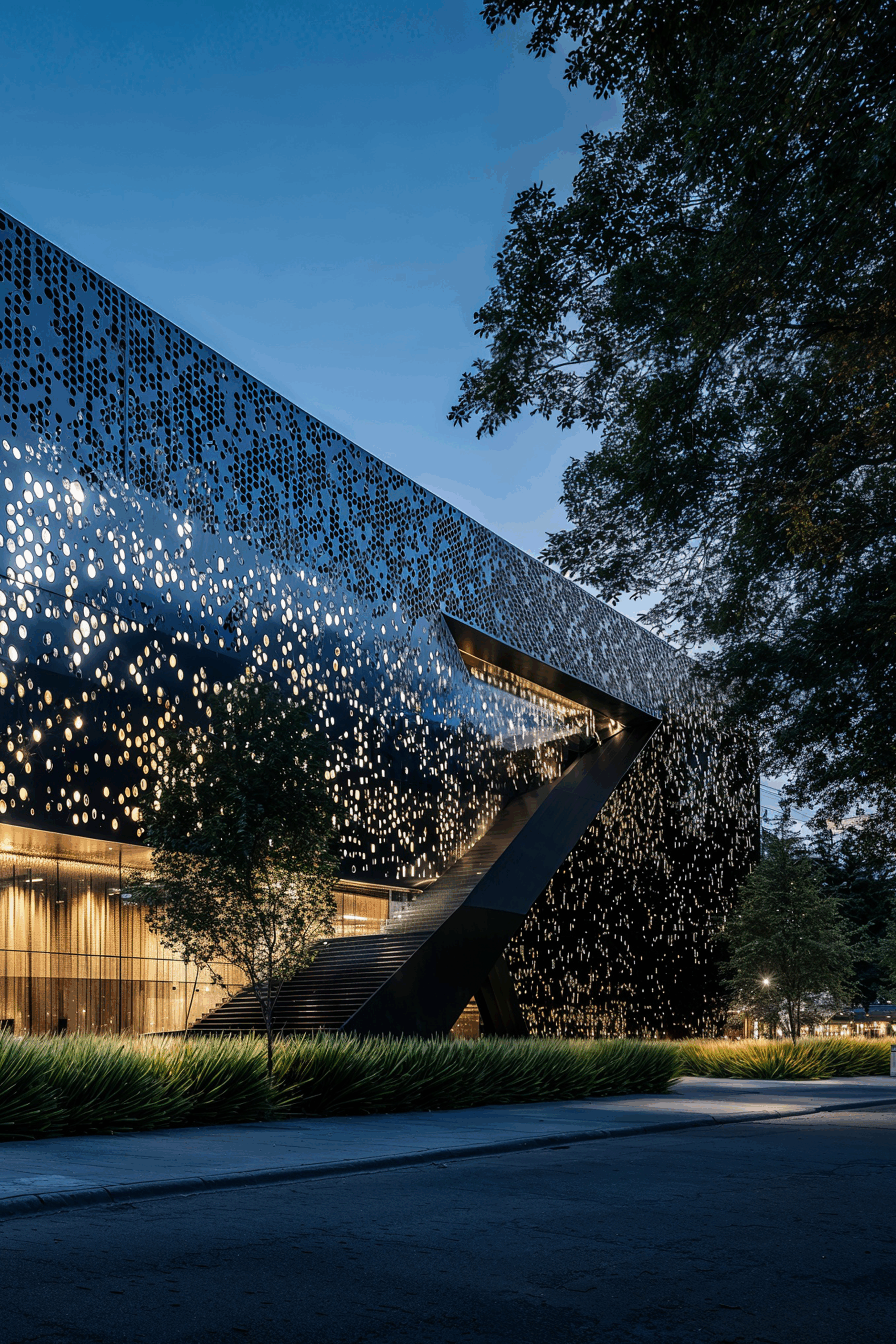
The scene shifts to the kinetic pulse of the city. Museum Option 2: The Avant-Garde Downtown Core. A perforated, sculptural form of black material and reflective glass, glowing at night. It is not a retreat, but an invitation on a vibrant plaza corner—legacy as downtown catalyst, as nightlife, as entertainment.
An African American boy nods in confident agreement. He sees his future in this boldness.
Then, the conceptual linchpin: the DNA Helix Bridge. A futuristic pedestrian crossing of curved black steel and glass flooring, lit with ethereal LEDs at dusk. It is not merely a walkway. It is the literal and metaphorical double helix, the code of inheritance, connecting heritage to aspiration. It is the “ascendant” path made physical.
Movement III: The Community Plaza & The Wink
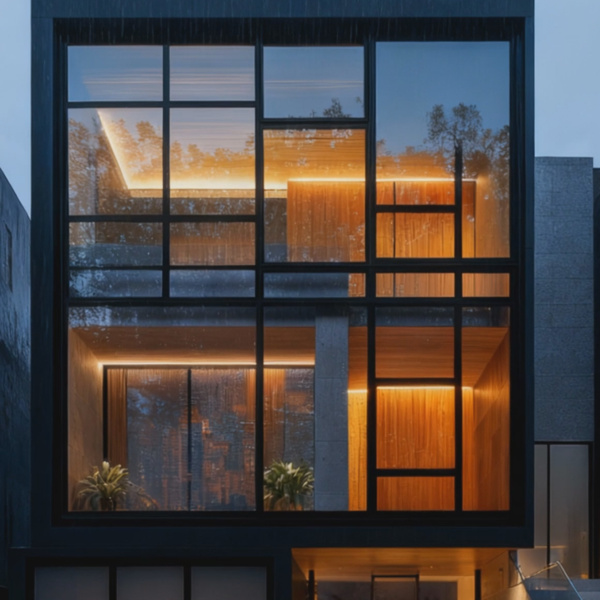
We land in a cultural district with Museum Option 3: The Geometric Plaza. A neo-modern trapezoid with a daring cantilevered roof, clad in black tile and brick. It is “76% contemporary”—firmly of the now. Its roof is a covered plaza; its grounds are winding paths under plush trees after a rain. This is legacy as a community space, for gathering, for inspiration, for fun.
Finally, the musician. He holds his mic stand, leans back, and winks at the camera above. The wink is the entire film’s punctuation. It is confidence, playfulness, and complicity. It says, “We see this vision too. And we’re ready for it.”
The Vision, Synthesized
“Legacy Ascendant” masterfully argues that a Hall of Fame must be more than a hall. It must be a sequence: a Sanctuary in the mountain (rooted reverence), a Beacon in the city (urban vibrancy), and a Forum in the district (communal joy), all connected by a Helix (the code of continuity).
The film’s power is in its dialogue between the intimate human moments—the pointe, the nod, the wink—and the monumental architectural proposals. It demonstrates that the legacy of a people is not a single style, but a spectrum: organic, avant-garde, and geometrically bold. It needs not one home, but an ecosystem.
This is the future of cultural architecture. Not a static monument, but a living, breathing, ascendant system. The ballerina has risen from her pointe. The path forward is built.