It proposes a metropolis where beauty is not an afterthought, but the very material of our shared space, inviting pause, touch, and wonder amidst the urban rhythm.
Stacey Wiggins
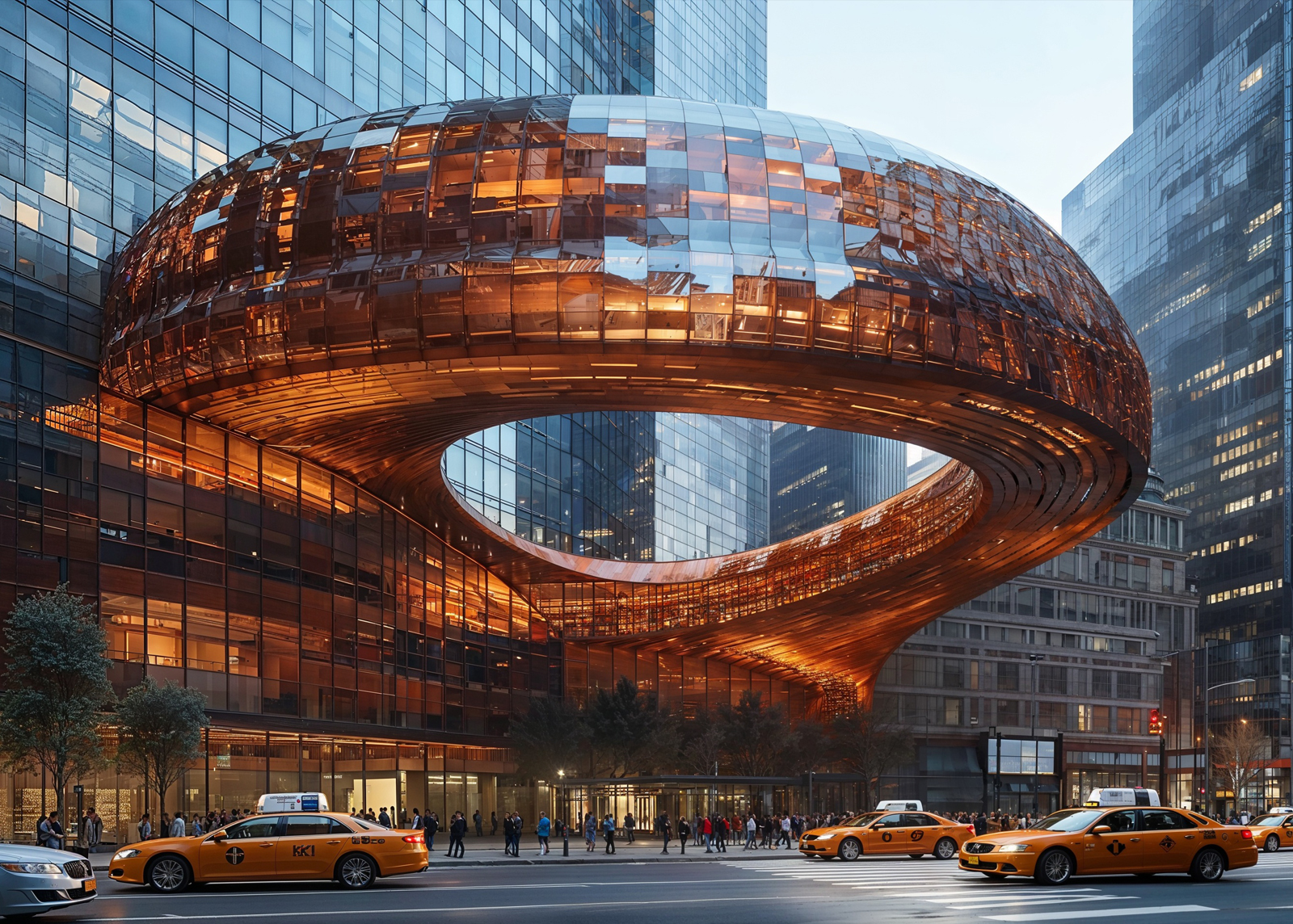
The clip opens at street level, following a woman in a crisp white trench coat over a vibrant red dress. She moves through the canyon of a modern city, not with the hurried pace of its crowds, but with the deliberate wonder of a visitor in a gallery. Her gaze is drawn upward to an extraordinary structure: an organic, flowing pedestrian bridge of shimmering copper that arcs between glass towers like a piece of captured sunlight. As she approaches, she reaches out, her fingertips grazing the building’s facade where copper meets glass, a small, intimate gesture to feel the texture of the marvel hovering above.
The camera mirrors her awe, gradually panning up from her point of view. It then transitions into a majestic, slow drone orbit, a seamless ascent around the bridge itself. This soaring perspective reveals the structure in full—a sculptural, nature-inspired form of avant-garde art that serves as a functional path. Bathed in the warm, cinematic glow of golden hour light, the copper seems to glow from within against the cool reflections of the surrounding skyscrapers.
Emotion
The scene evokes a profound sense of awe and intimate connection. It is the quiet wonder of a human confronted with a masterpiece of their own world, a blend of artistic reverie and the thrill of discovering beauty woven into the fabric of daily life. The woman’s touch and upward gaze transform the city from a busy impersonal space into a personal, touchable gallery.
Vision
This is a vision of the future city as a living, integrated work of art. It is an argument for architecture that doesn’t just serve but inspires—where infrastructure is not cold and utilitarian but warm, organic, and breathtaking. The bridge is more than a connector; it is a civic sculpture, a “sculpted path” that elevates the human experience, literally and emotionally.